Skip to content

Angel Post — Southwest Florida · chapter one · enrolling now

Leave word. A neighbor answers.

Angel Post is a national neighbor-to-neighbor network for families under pressure. An Angel Post is a place where someone stands watch: a church, a storefront, a table in front of a library. Chapter one opens in Sarasota County and Charlotte County, Florida.

First chapter
Sarasota & Charlotte counties
Judicial circuits
Circuit 12 & Circuit 20
Anchor partner invited
Diocese of Venice in Florida
Founding rule
Tokenize identifiers, never human beings

What this is, and what it is not

Angel Post is not asking permission to exist. It exists. This page is an invitation to join it. No diocese, parish, Catholic Charities agency, community-based care lead agency, government body, referral platform, or nonprofit named on this page has endorsed, joined, funded, authorized, or committed to Angel Post. Every organization is named as invited, or as publicly documented context, and nothing here implies agreement.

Angel Post is not an emergency service and no family has yet been served through it. No family data has been collected, and none will be collected outside the safeguarding standard published below. Angel Post is not affiliated with CarePortal, The Global Orphan Project, the Florida Department of Children and Families, or any community-based care lead agency. Angel Post links into existing systems; it replaces none of them.

The situation

Most separations begin as a solvable problem.

A car that will not start. A rent gap of four hundred dollars. A child with no bed of their own. Poverty is not neglect, but unmet material need is the pressure that turns a struggling family into a case file.

Florida is already moving in the right direction. Statewide, the average monthly count of children in out-of-home care fell to 14,634 in calendar year 2025, down roughly 13 percent from 16,979. The question is what holds that gain, and who reaches the family first. Angel Post is built to be the neighbor who gets there before the crisis does.

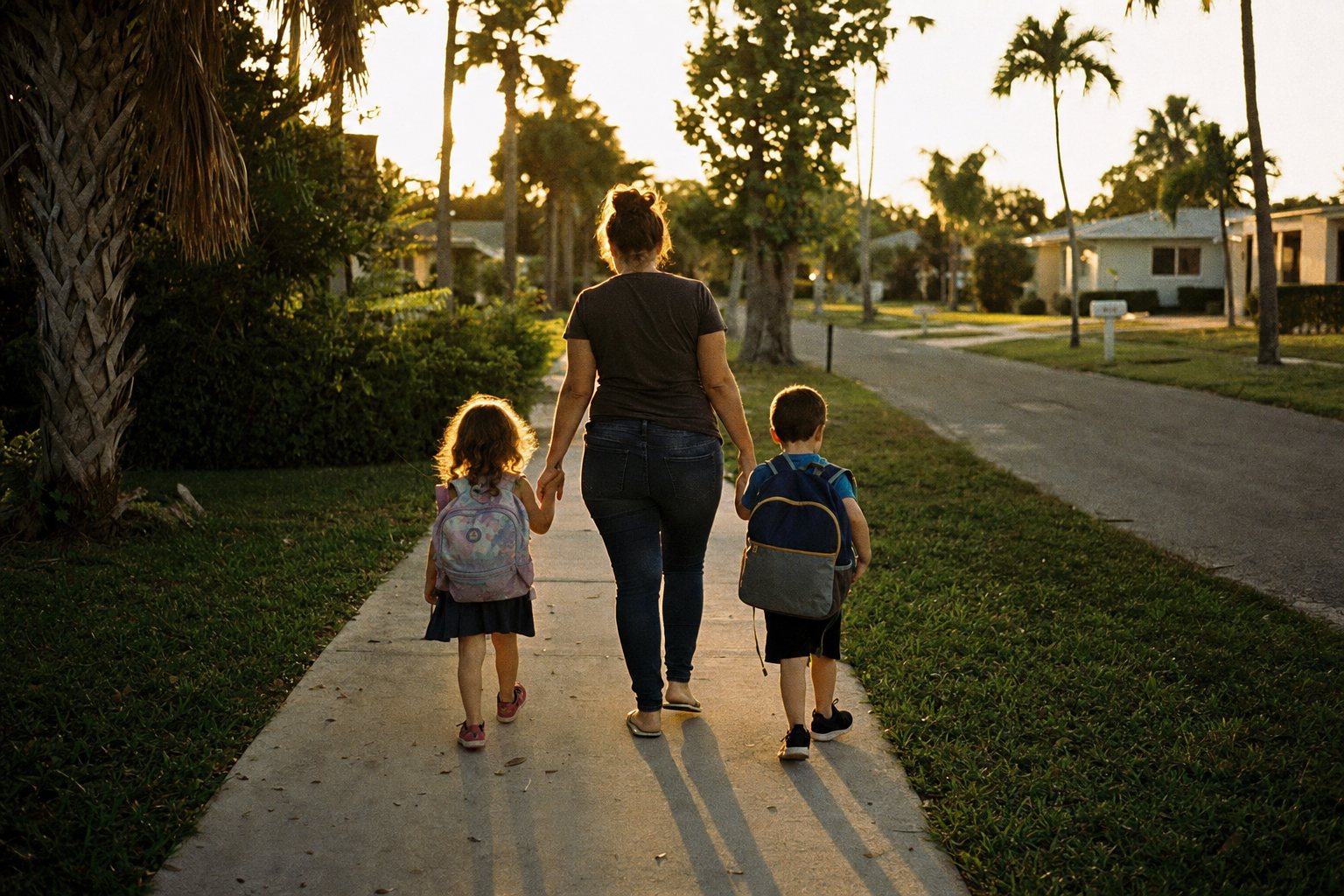
A parent and child walking together on a Southwest Florida street at dusk, seen from behind.

138

Sarasota County children in out-of-home care

CAFO Florida county data, Sarasota

69

Charlotte County children in out-of-home care

CAFO Florida county data, Charlotte

45 / 34

Licensed foster homes, Sarasota / Charlotte

CAFO Florida county data

61

Parishes in the Diocese of Venice, across 10 counties

Diocese of Venice in Florida

The finding that shapes the chapter

Sarasota and Charlotte are not one system. They are two.

They share a bishop, a coastline, and a labor market. They do not share a child-welfare authority. Sarasota County sits in Judicial Circuit 12. Charlotte County sits in Judicial Circuit 20. Different lead agencies, different case-management subcontractors, different permission sets, different data agreements. Any plan that treats the region as one system fails on first contact. Angel Post runs one identity, one safeguarding standard, and two county operating teams.

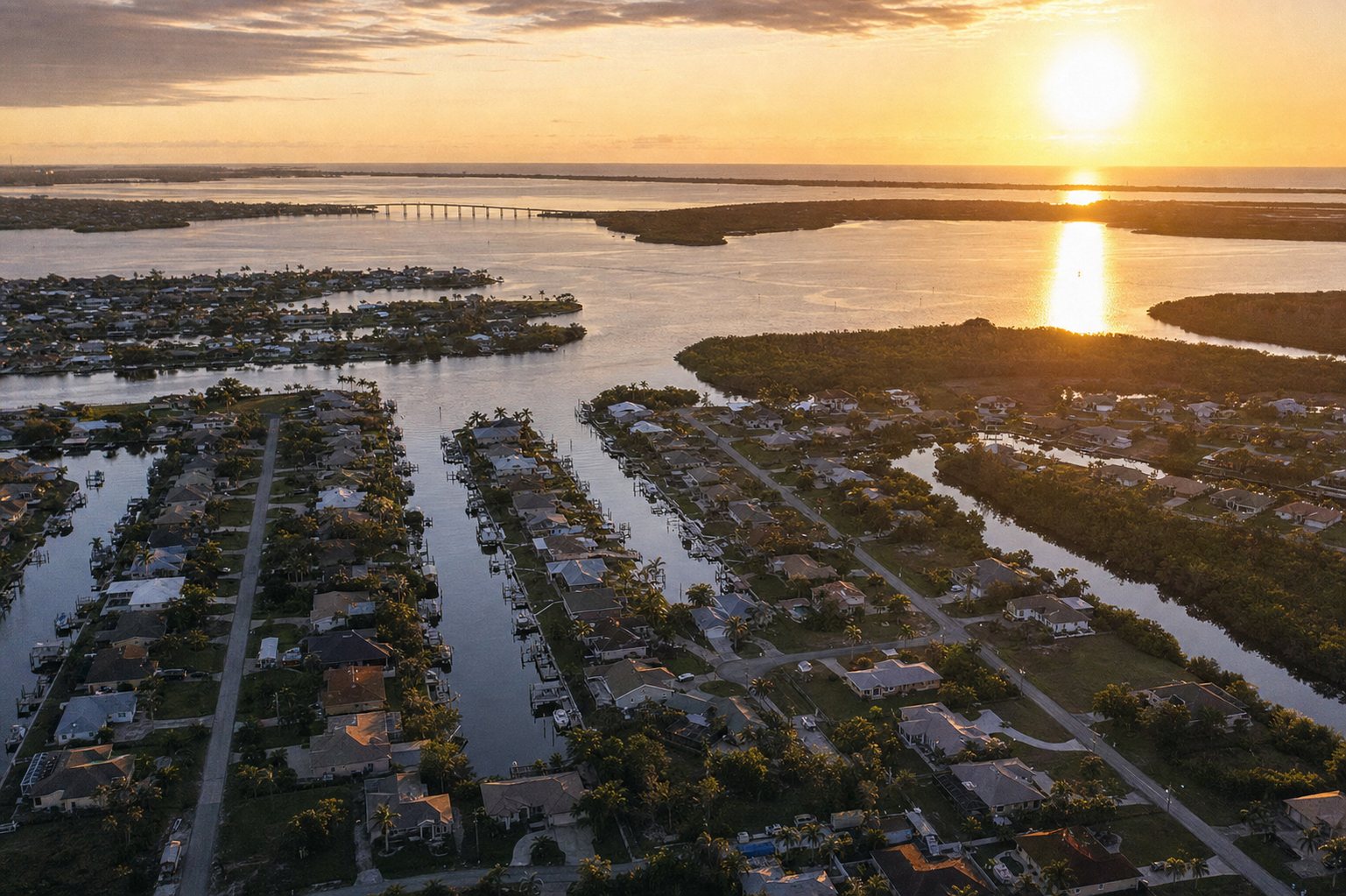
Aerial view of Sarasota Bay and the surrounding neighborhoods at first light.

Judicial Circuit 12

Sarasota County

Lead community-based care agency
Safe Children Coalition (Sarasota, Manatee, DeSoto), CEO Brena Slater
Existing referral infrastructure
CarePortal operates here, with Bridge A Life as implementing partner
Population
476,604 residents (2024 Census estimate)
Angel Post posture
Link in beside what already works. Duplicate nothing.
Charlotte Harbor at dawn with mangrove shoreline and calm water.

Judicial Circuit 20

Charlotte County

Lead community-based care agency
Children's Network of Southwest Florida, CEO Nadereh Salim
Case management in Charlotte
Camelot Community Care, under subcontract
Population
212,122 residents (2024 Census estimate)
Angel Post posture
Its own county team, its own permissions, the same standard.

A claim Angel Post will not make

CarePortal's published Circuit 12 case study reports that among families served, the rate of a verified report resulting in removal fell from 10.4 percent to 4.3 percent between July 1, 2020 and June 30, 2021. That figure belongs to Circuit 12 (Sarasota, Manatee, DeSoto), to that single year, and to CarePortal's own reporting.

It is not a Charlotte County result, it is not an Angel Post result, and a before-and-after percentage is not proof of causation. Angel Post cites it as a reason to build, never as a promise of what it will deliver.

Sources: CarePortal Circuit 12 case study, a platform of The Global Orphan Project; U.S. Census QuickFacts; Florida DCF lead agency information.

Three explanation films

Twelve minutes, and you will know exactly what Angel Post is.

Each film is narrated and transcribed below. No child's face appears in any frame. Every image was generated for this project. Transcripts are lightly edited for reading.

Film one

A Neighbor Before a Crisis

What an Angel Post is, why the first ones open in Sarasota County and Charlotte County, and why the network links in rather than replaces.

Narrated · about 2 minutes

Read the transcript

Every child belongs to a family. And every family, at some point, needs a neighbor.

In Southwest Florida, most children who enter foster care are not taken from cruelty. They are taken from crisis. A broken car. An eviction notice. A missing bed. A single month that went wrong.

Angel Post is a network built to meet those needs early, before a family comes apart.

An Angel Post is a place where someone stands watch. A church. A storefront. A table in front of a library. Somewhere a parent can walk up and say, I need help, and be met without shame.

We are opening the first Angel Posts in Sarasota County and Charlotte County. We hold the platform, the standard, and the research. What we build here is designed to open anywhere.

We are not replacing anyone. Every county already has agencies, charities, and congregations doing this work. Angel Post links them together and keeps its own record, so that no family falls through the space between two systems.

We are bringing this to the Diocese of Venice in Florida, because sixty-one parishes already stand in the neighborhoods we are trying to reach. The infrastructure of care is already built. It is called the parish.

This is an invitation. No organization named in this film has joined, endorsed, or funded Angel Post. The invitation is open.

Leave word. A neighbor answers.

Film two

One Verified Need at a Time

The four ways a need reaches Angel Post, the closed loop end to end, and the two-circuit correction that shapes everything.

Narrated · about 2 minutes

Read the transcript

Here is how Angel Post is designed to work.

It begins with a need. Not a story. A need. A crib. A rent gap. A repaired roof.

That need can reach us four ways. A family can ask directly, with no case and no referral required. A parish can raise a need it already knows about. A partner nonprofit can bring one from its own caseload. And where a written agreement is in place, an authorized agency can refer one.

Four doors. One standard.

Once the need is verified, it is stripped of every identifying detail and posted as a token. A code, not a child.

Trained neighbors and partner organizations see only what they need to see in order to help. One of them claims it. Delivery is coordinated through the Angel Post or the referring organization, never a stranger at a family's front door.

Then the loop closes. Delivered. Confirmed. Recorded.

One important correction, and it shapes everything. These two counties are not one system. Sarasota County sits in Judicial Circuit twelve, led by the Safe Children Coalition. Charlotte County sits in Circuit twenty, led by the Children's Network of Southwest Florida.

Two circuits. Two lead agencies. Two sets of permissions.

Any plan that treats them as one region will fail on contact.

So we build one identity, one safety standard, and two county operating teams. We keep our own database and our own mission.

And we link in with everyone willing to be linked.

Film three

Tokenize Identifiers, Never Human Beings

The safeguarding and privacy standard, the access controls, and the practices Angel Post will never adopt, including the one many technologists would expect.

Narrated · about 2 minutes

Read the transcript

A system built to protect children can become the thing that exposes them. So the safeguarding standard comes first, before a single family is served.

The founding rule is this. Tokenize identifiers, never human beings.

Every case, request, organization, and user receives a random identifier. Identity data lives in one place. Service activity lives in another. Names, addresses, diagnoses, photographs, immigration status, school details, and precise locations never appear in a request.

Access is earned, not assumed. Verified identity. Background checks. Signed conduct and confidentiality agreements. Completed training. Least privilege by role and by county. Multi factor authentication. Immutable audit events. Time limited invitations.

And an allowlist is never a guarantee of safety, so suspension and appeal are built in from day one.

Now the prohibitions, which matter just as much.

No public browsing of cases. No donor access to identities. No behavioral scoring of families. No facial recognition. No covert location tracking. No training artificial intelligence models on family data. No automated decisions about who is eligible for help.

And no blockchain for child records. Permanence is the opposite of a child's right to be corrected, and to be forgotten.

Help that costs a family their privacy is not help. It is a second harm.

The closed loop

A verified need goes out. A confirmed delivery comes back. Nothing else moves.

The loop is deliberately narrow. A need is verified before it is posted, only a verified neighbor or partner can see one, and the close is confirmed by the Angel Post or the organization that raised it. There is no browsing, no matching of donors to children, and no public feed of families in trouble.

Verified need four ways in Tokenized request a code, not a child Verified neighbor or partner organization Coordinated delivery through the Angel Post post claim fulfil confirm & close

Scroll the diagram sideways

Verified need

A concrete need is recorded for a specific family: a crib, a rent gap, a repaired roof. Never a narrative, never a photograph, never a child's name.

Tokenized request

Identity is stripped and replaced with a random identifier. What a neighbor sees is the item, the county, the timeframe, and nothing else.

Claim by a verified neighbor

Only trained, background-checked, agreement-signed people and organizations on the county allowlist can claim. Claims are logged with an immutable audit event.

Coordinated close

Delivery is arranged through the hosting Angel Post or the organization that raised the need, never through a stranger's front door. Then the loop closes.

Where needs come from

Four ways in. One standard.

No one should have to understand the child-welfare system to ask for a bed. A family can walk up to an Angel Post and say what it needs. Every lane runs through the same verification step and the same tokenization; the lane never changes the safeguarding standard.

A family asks directly

The primary lane. A parent or caregiver walks up to an Angel Post, or asks online, and states a need. No case, no agency, no referral required.

  • Help never depends on worship or belief
  • Never on conversion or political participation
  • Never on publicity or a photograph
  • Never on data a family does not need to give

A parish or congregation raises one

A need the congregation already knows about in its own community, brought forward by its own trained point of contact.

  • Named point of contact per Angel Post
  • Safeguarding training completed first
  • Readiness checklist before any request arrives
  • Decline freely, with no penalty and no record

A partner nonprofit raises one

A need from the partner's own caseload, brought into Angel Post so that a resource can be found beside, not instead of, the services it already provides.

  • Passes the six vetting tests below
  • Least-privilege access by role and county
  • Written data terms before any access
  • Suspension and appeal built in from day one

An authorized agency refers one

Available only where a written agreement is in place. Referrals about a child with an open dependency case or in state custody require an authorized child-welfare agency's agreement, because that is Florida confidentiality law.

  • Subject to written agreement, per circuit
  • Listed last, and last to be built
  • Angel Post operates fully without it
  • Never a precondition for anything above

Enrollment is open

Sign up online, or at a table in your own neighborhood.

Angel Post enrolls people and places now, in both directions: online through the pathways below, and in person at tables and weekly gatherings. An Angel Post is a repeatable unit, a table, a window mark, printed materials, a trained volunteer, and a weekly gathering time. That is how the network grows without renaming anything.

A family

Ask for help. Say what you need in plain language.

  • A verified need entered without your child ever being named
  • No case and no referral required
  • Enrollment link: [PLACEHOLDER — portal URL]

A neighbor

Answer a posted need. Claim one request at a time.

  • You see a tokenized request, never a family's identity
  • Delivery is coordinated, never a stranger at a door
  • Training and a signed conduct agreement come first

A church or parish

Host an Angel Post. Become the place that stands watch.

  • Training and the safeguarding standard
  • A window mark, so a family knows where to go
  • A weekly Angel Post Gathering at your venue

A nonprofit

Link in as a partner. Keep your mission and your systems.

  • Interoperation with your own caseload and tools
  • One shared safeguarding and data standard
  • The six vetting tests apply, in writing, both ways

A business or civic site

Host an enrollment table. Lend a doorway and a few hours.

  • Signage and printed materials provided
  • A named Angel Post location on the map
  • A trained volunteer staffs every table

In person, where people already are

Weekly Angel Post Gatherings are hosted at churches and other willing venues. Enrollment tables and sign-up spots go where an ordinary week already takes people: churches, grocery store entrances, in front of libraries, the DMV, and comparable public locations. The America's Future office in North Port has been invited to host a table; that would require its agreement in writing and it has agreed to nothing.

Gathering venue, start time, and RSVP contact: [PLACEHOLDER — venue, weekly start time, RSVP contact]. Enrollment and table requests: [PLACEHOLDER — enrollment email and mailing address].

Angel Post is never an emergency service. Every enrollment surface, online and printed, carries the crisis numbers below, and in Florida every adult is a mandatory reporter of suspected child abuse under Florida Statute 39.201.

A national network

Angel Post is the national brand. Southwest Florida is chapter one.

Angel Post was designed from the first day to open anywhere. The pilot presents as Angel Post — Southwest Florida so that a county partner meets a named, local, accountable chapter. Every process, document, and screen is built to replicate to the next chapter without renaming anything, and without weakening the standard.

Chapter one

Sarasota and Charlotte

The first Angel Posts open in Sarasota County and Charlotte County: two circuits, two county operating teams, one identity and one safeguarding standard.

The unit

One Angel Post, repeated

A table, a window mark, printed materials, a trained volunteer, a weekly gathering time. Small enough for one congregation to carry, standard enough to copy exactly.

The chapter

A chapter opens where people ask

A chapter is a set of Angel Posts, a county team, and the same written standard. No dates and no other cities are announced, because a chapter opens when local people are trained and ready, not when a calendar says so.

The constant

One standard everywhere

The platform, the safeguarding standard, the training, and the vetting tests travel with the name. A chapter may not lower them locally, and no chapter is asked to reinvent them.

How Angel Post vets a partner

Doing similar work is not a qualification.

Angel Post does not partner with an organization simply because it works on the same problem. Before any organization is named as an Angel Post partner in any material, it must pass all six tests below, and the review is written down and retained. Angel Post applies these tests to itself first.

Test 01

Results are child-level, not system-level

They can say what happened to the child, not only what a government agency avoided. Deflection rates, cost-avoidance figures, and caseload reductions measure a system, not a childhood.

Test 02

Lived experience holds real authority

People who were fostered, adopted, or aged out of care hold governance seats with votes. Not an advisory panel, not a testimonial. Angel Post applies this test to itself first.

Test 03

Clean and disclosed regulatory record

No open adverse ruling, cease-and-desist, or consent order relevant to child placement or custody. Disclosed and resolved history is acceptable; active exposure is not.

Test 04

No child leaves home through the partnership

Angel Post never arranges, suggests, brokers, hosts, or facilitates a child leaving a parent's home, not formally, not informally, not under the word voluntary. Angel Post moves the resource to the family. This test is not waivable by anyone.

Test 05

Presence here, or a capability worth importing

They operate in Judicial Circuit 12 or Judicial Circuit 20, or they bring a specific capability the network does not already hold.

Test 06

They accept the data rule in writing

Tokenized identifiers, no resale, no secondary use, no sharing outside the stated purpose, and no attempt at re-identification.

A completed review: Safe Families for Children

Safe Families for Children was reviewed and is not named as an Angel Post partner. Its model places a child outside the parent's home, and Angel Post never does that, which is test four. Separately, its published chapter list shows no chapter serving Sarasota County or Charlotte County (Safe Families Florida chapters), which is test five.

Angel Post carries no view on the merits of host-family care. The finding is about fit with this network's own rules, nothing more. Reviews are recorded in writing, and an organization that is not a partner today may be reviewed again.

The founding rule

Tokenize identifiers, never human beings.

Every case, request, organization, and user carries a random identifier such as req_7f3c…d19. Identity data lives in one store. Service activity lives in another. A request carries no name, address, diagnosis, photograph, immigration status, school detail, or precise location, because help that costs a family their privacy is not help. It is a second harm.
Access is earned, not assumed

  • Verified organizational and individual identity
  • Background screening appropriate to the role
  • Signed conduct and confidentiality agreements
  • Completed safeguarding training before the first request
  • Least privilege by role and by county
  • Multi-factor authentication and time-limited invitations
  • Immutable audit events, with suspension and appeal

Prohibited, permanently

  • Public or donor browsing of cases and families
  • Donor access to the identity of any child or family
  • Behavioral scoring or risk-ranking of families
  • Facial recognition and covert location tracking
  • Training AI models on family or case data
  • Automated decisions about who is eligible for help
  • Blockchain or any immutable ledger for child records

Parish and school volunteers in the Diocese of Venice already complete the diocesan Safe Environment Program, which uses Virtus "Protecting God's Children." Where a parish hosts an Angel Post, the Angel Post standard sits behind that requirement, never beside it and never in place of it. Safeguarding lead: [PLACEHOLDER — safeguarding lead name and contact].

Roles, stated precisely

Who owns Angel Post, who is invited, and what each one actually does.

Precision here is a safeguarding matter. Overstating a role is how good intentions turn into a misrepresentation, so each entry below is limited to what is publicly documented and honestly claimable. Angel Post is a product of the Operation Angels ecosystem, organized as Create · Connect · Protect; Angel Post lives in Connect and Protect.

Platform owner and licensor

BORN BETWEEN GENERALS, LLC

Florida limited liability company · document number L26000034044 · filed and effective 01/12/2026 · status ACTIVE · 421 Commercial Ct, Ste. B, Venice, FL 34292 · registered agent and manager O'Neill, Mary

The Angel Post platform, the tokenization layer, and the audit tooling are built and owned here, then licensed to participating nonprofits under written agreement. Angel Post therefore does not need anyone's permission to exist: the database, the brand, the safeguarding standard, and the training are already owned.

Because the licensor is a for-profit company, its boundaries are written into the design: it is not a service provider, it holds no authority over any family or case, it may not use family data for any purpose beyond operating the service, and the safeguarding committee, not the vendor, decides what the software is allowed to do. Public record note: no FEI/EIN is on file and no annual report has yet been filed (Florida Division of Corporations).

Anchor partner · invited to consider

Diocese of Venice in Florida & Catholic Charities

Established 1984 · Most Rev. Emilio Biosca Agüero, O.F.M. Cap., installed July 11, 2026 · 10 counties · 61 parishes · roughly 250,000 Catholics · Chancellor Dr. Volodymyr Smeryk

The diocese covers both chapter-one counties, which is rare and valuable: one bishop, one safe-environment standard, and parish presence in every neighborhood an Angel Post needs to reach. Catholic Charities, Diocese of Venice reports serving more than 155,000 individuals in 2025 with about $3.6 million in direct assistance.

The diocese is invited to consider becoming the anchor partner of the Southwest Florida chapter. That is a decision about its own parishes and its own people, not a decision about whether Angel Post may exist. Nothing on this page is evidence of diocesan participation, approval, or affiliation of any kind.

Peer organization · invited

Half a Million Kids

501(c)(3) · EIN 81-0705219 · founder Leah Stauffer · Newtown Square, Pennsylvania · holds its own technology, HMK Interactive SIIS

No verified Florida operations

Invited to interoperate on the permanency and adoption dimension of the mission. Because it already holds a comparable platform of its own, it is a peer to link in with, not an organization that plugs into Angel Post.

Stated plainly: its verified programs are Pennsylvania-based, and any Southwest Florida participation would be new work requiring its own board's decision. It has agreed to nothing.

Civic venue and community reach · invited

America's Future, Inc.

501(c)(3) · EIN 13-1549794 · founded 1946 · North Port, Florida (Sarasota County) · Chairman Lt. Gen. Michael T. Flynn (USA, Ret.)

Not a child-welfare provider

A long-standing Florida nonprofit headquartered inside the chapter footprint. Any role would be civic convening, venue, and community reach only: hosting an enrollment table or a gathering, and nothing touching case data.

It does not provide child-welfare services, holds no role in any referral, and has been invited only. Any table at its office would require its agreement in writing.

County authorities · publicly documented context

Safe Children Coalition & Children's Network of Southwest Florida

Community-based care lead agencies for Judicial Circuit 12 and Judicial Circuit 20

These agencies hold the legal responsibility for children in their circuits. One Angel Post function depends on them: a referral about a child with an open dependency case or in state custody, which requires an authorized agency's written agreement under Florida confidentiality law. That is a later integration, not a precondition, and Angel Post operates fully without it.

Neither agency has reviewed, agreed to, or endorsed anything described here. They are named as documented fact about the two circuits, and as counterparts Angel Post would be glad to meet.

The literature

The Angel Post literature packet.

Forty-one pages, written to be read by a bishop, a chancellor, a pastor, a nonprofit board, a business owner with a doorway, and a family that just needs a bed. Each audience finds its own section, its own commitments, and its own way to say no.

If you need help right now

This site cannot help you today. These numbers can.

Angel Post is not an emergency service and is not operating yet. If a child is in danger, or your family is in crisis, use these instead, and know that in Florida every adult is a mandatory reporter of suspected child abuse under Florida Statute 39.201.

Immediate danger

911

A child is being hurt right now, or someone's life is at risk.

Florida Abuse Hotline

1-800-96-ABUSE

1-800-962-2873, 24 hours. Or report online at reportabuse.myflfamilies.com.

Suicide & Crisis Lifeline

988

Call or text, 24 hours, for anyone in emotional crisis.

Sarasota County resources

(941) 308-4357

211 Suncoast Cares. Or simply dial 2-1-1 for local food, housing, and utility help.

Charlotte County resources

(239) 433-3900

Dial 2-1-1, or call this number. 211 via United Way of Charlotte County, in partnership with United Way of Lee County.

Harm within a church setting

(941) 441-1101

Diocese of Venice Victim Assistance Coordinator, Susan Benton. Reporting to civil authorities always comes first.

The invitation

Angel Post is not asking permission to exist. It exists. This is an invitation to join it.

  • 01The Diocese of Venice in Florida is invited to consider becoming the anchor partner of Angel Post — Southwest Florida.
  • 02Parishes are invited to host an Angel Post: a table, a window mark, a trained volunteer, and a weekly Angel Post Gathering.
  • 03Nonprofits are invited to link in, keeping their own mission and systems, under one shared safeguarding and data standard.
  • 04Businesses, civic sites, and neighbors are invited to host an enrollment table where an ordinary week already takes people.
  • 05Any invited partner may appoint a safeguarding reviewer of its own choosing, with authority to say no to anything on this page.

Sources

Every figure on this page, traceable.